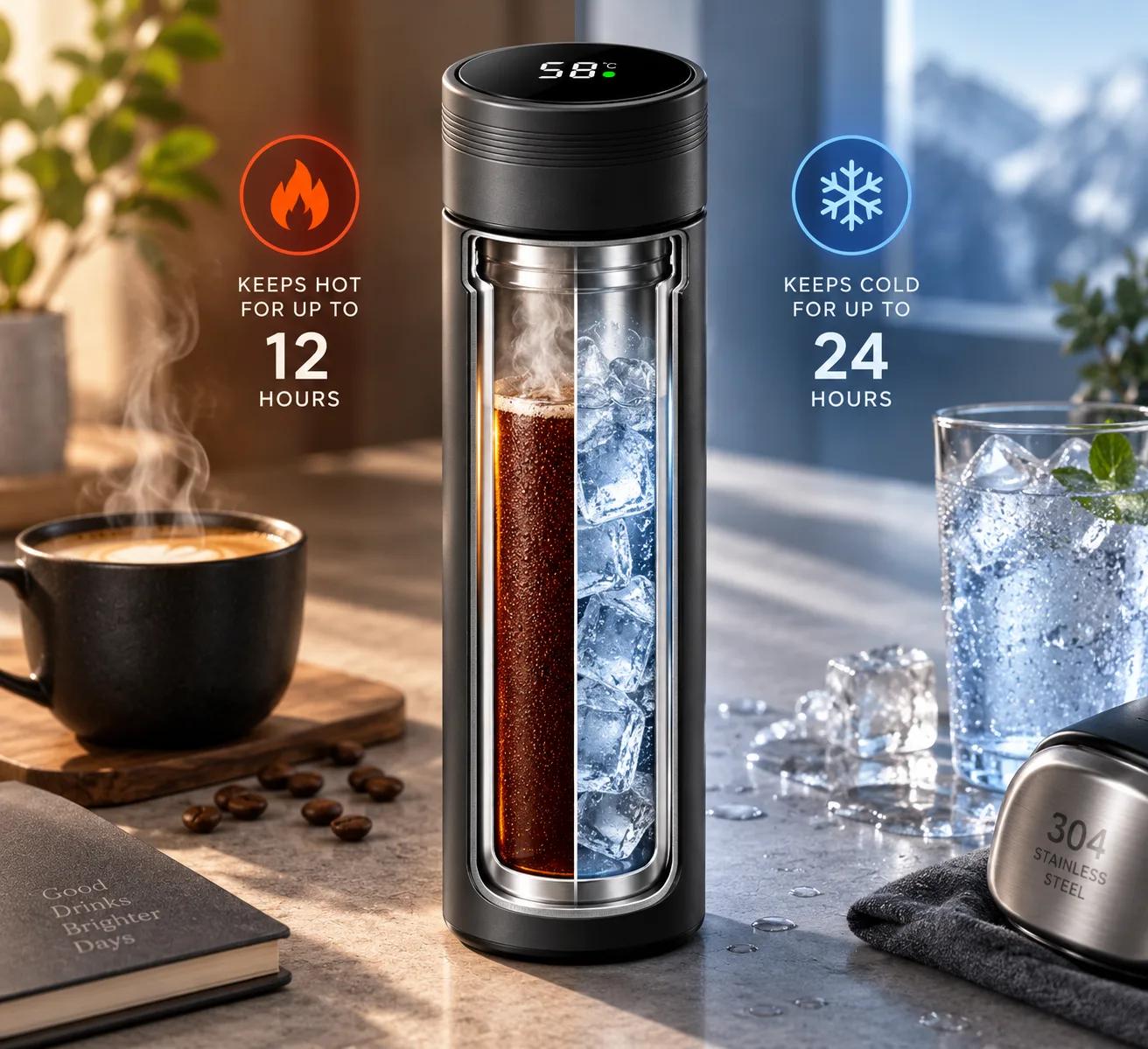
A thermos flask - or vacuum flask, to use its proper name - keeps drinks hot or cold using a surprisingly old idea: remove the air, and heat has almost nowhere to go.
The vacuum gap is the whole trick
Every quality thermos flask, Thermoscup included, is built with two walls of stainless steel with a sealed gap between them. That gap has had most of its air pumped out - it's a partial vacuum. Heat needs a medium to travel through: air, liquid or solid. With almost no air in that gap, heat conduction and convection barely happen at all. Your drink's warmth (or coldness) stays where it is instead of leaking out through the walls.
Why the lid matters as much as the walls
The vacuum gap only covers the sides and base. The lid is where flasks lose the most heat if it's not designed properly, which is why a tight, well-fitted lid matters as much as the insulation itself. On Thermoscup, the smart LED cap adds a temperature display without compromising that seal.
So how long does it actually last?
Quality matters more than marketing numbers here. A well-made double-wall stainless steel flask - like Thermoscup, rated to 12 hours hot and 24 hours cold - will comfortably outperform a cheap single-wall bottle, which offers next to no real insulation. We cover the specifics of what changes those numbers in how long a thermos keeps drinks hot.
No batteries, no electronics, just physics
That's the part people often don't expect: the insulation itself needs no power at all. It's the same vacuum-flask principle whether it's a £5 bottle or a smart flask with a digital display - the electronics on Thermoscup only run the temperature readout, not the insulation.
Want to see it in your own hands? Shop the Thermoscup Smart LED Flask.